
Top Fractional Chief Revenue Officer in Denver Statistics USA ‘26

Finding the right fractional chief revenue officer (CRO) can give growing companies access to senior commercial expertise without committing to a permanent executive hire. However, for C-suite founders, choosing the right person involves more than assessing a candidate’s revenue experience. Industry knowledge, professional networks, credibility and the ability to demonstrate real-world results can all influence the decision.
To find out what 108,403 opinions of C-suite founders in the US were about the top fractional CROs in Denver, we utilized AI-driven audience profiling to synthesize insights from online discussions over 12 full months ending September 23rd, 2026, to a high statistical confidence level. The results illustrate what C-suite founders look for in fractional CROs, from where they search and how they vet candidates to the qualities they value most.
Index
- Methodology and data
- 12% of C-suite founders’ search for a fractional chief revenue officer is triggered at the pre-seed to seed stage; 44% agree this business growth stage is a likely trigger, while 24% don’t find this stage a common trigger, and it’s rarely a trigger for 10%
- For 46% of C-suite founders, having a background in a venture capital firm is a top priority when looking for a fractional chief revenue officer; this is a strong consideration for 37%, but is less important for 9%, and 4% don’t prefer this type of background
- 100% of C-suite founders typically begin their search for a fractional chief revenue officer in Denver via direct outreach on LinkedIn
- 87% of C-suite founders find professional networking platforms to be a reliable option when identifying top fractional chief revenue officers in Denver, but 13% don’t trust these platforms
- For 38% of C-suite founders, the top resource when researching fractional chief revenue officers is founder communities and Slack groups, 39% also find these to be strong resources, and for 15%, they are a minor resource, yet 8% don’t find them valuable
- An existing network is a crucial factor in access to warm introductions for sales and plays a crucial role in C-suite founders’ hiring decisions, while 55% cite warm introductions as an important consideration, and 6% find them somewhat relevant
- 100% of C-suite founders typically verify the credibility of a fractional chief revenue officer by reviewing LinkedIn recommendations
- 100% of C-suite founders typically vet a fractional chief revenue officer’s claimed results by reviewing LinkedIn endorsements and posts
- When fractional chief revenue officer candidates are honest about what did not work and why, 100% of C-suite founders find this a positive attribute
- 100% of C-suite founders’ companies operate in the financial services and fintech industry
- Key takeaways for fractional CROs
Methodology and data
Sourced using Artios from an independent sample of 108,403 opinions of C-suite founders in the USA across X, Quora, Reddit, Bluesky, TikTok, and Threads. Responses are collected within a 95% confidence interval and a 5% margin of error. Results are derived from what people describe online, from opinions expressed, not actual questions answered by people in the sample.
What company growth stage triggers C-suite founders’ search for a fractional CRO in Denver?
12% of C-suite founders’ search for a fractional chief revenue officer is triggered at the pre-seed to seed stage; 44% agree this business growth stage is a likely trigger, while 24% don’t find this stage a common trigger, and it’s rarely a trigger for 10%
Seeding stage presses the trigger:
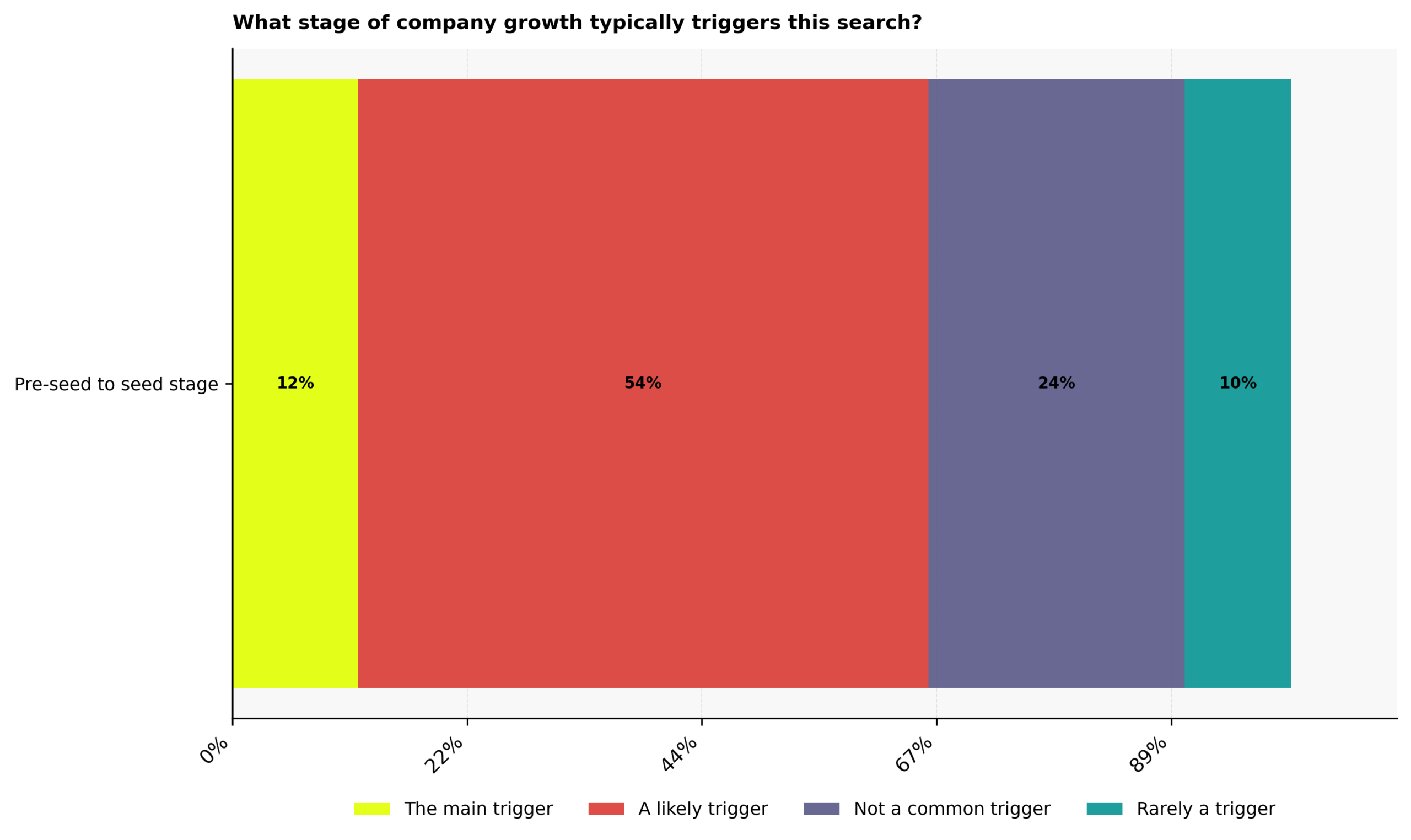
For C-suite founders, the pre-seed to seed stage clearly drives the search for a fractional chief revenue officer in Denver. For 12% of our audience, this phase is the main trigger, while a strong 54% identify it as a likely trigger. Combined, 66% indicate early-stage companies see immediate value in senior revenue leadership without waiting for later funding rounds.
Even among the C-suite founders who don’t view it as a common trigger, 24% still acknowledge it happens, and only 10% say it rarely occurs. This pattern fits a market where flexible, experienced leaders help startups build pipeline, define pricing, and prepare for scale from day one.
The wider market is also maturing. In 2025, the fractional CRO population across the US and Canada was approaching 9,000 professionals, reflecting steady adoption by growth-focused companies. Rather than expanding at an explosive rate, the market is developing structurally as businesses seek senior commercial expertise without taking on a permanent executive commitment.
The supply side is maturing too, with 54% of executives having more than three years of fractional experience. This growing depth of experience gives companies greater access to established expertise and practical benchmarks when considering fractional leadership.
What type of background in a fractional CRO is most sought after by C-suite founders in Denver?
For 46% of C-suite founders, having a background in a venture capital firm is a top priority when looking for a fractional chief revenue officer; this is a strong consideration for 37%, but is less important for 9%, and 4% don’t prefer this type of background
Background preferences vary:
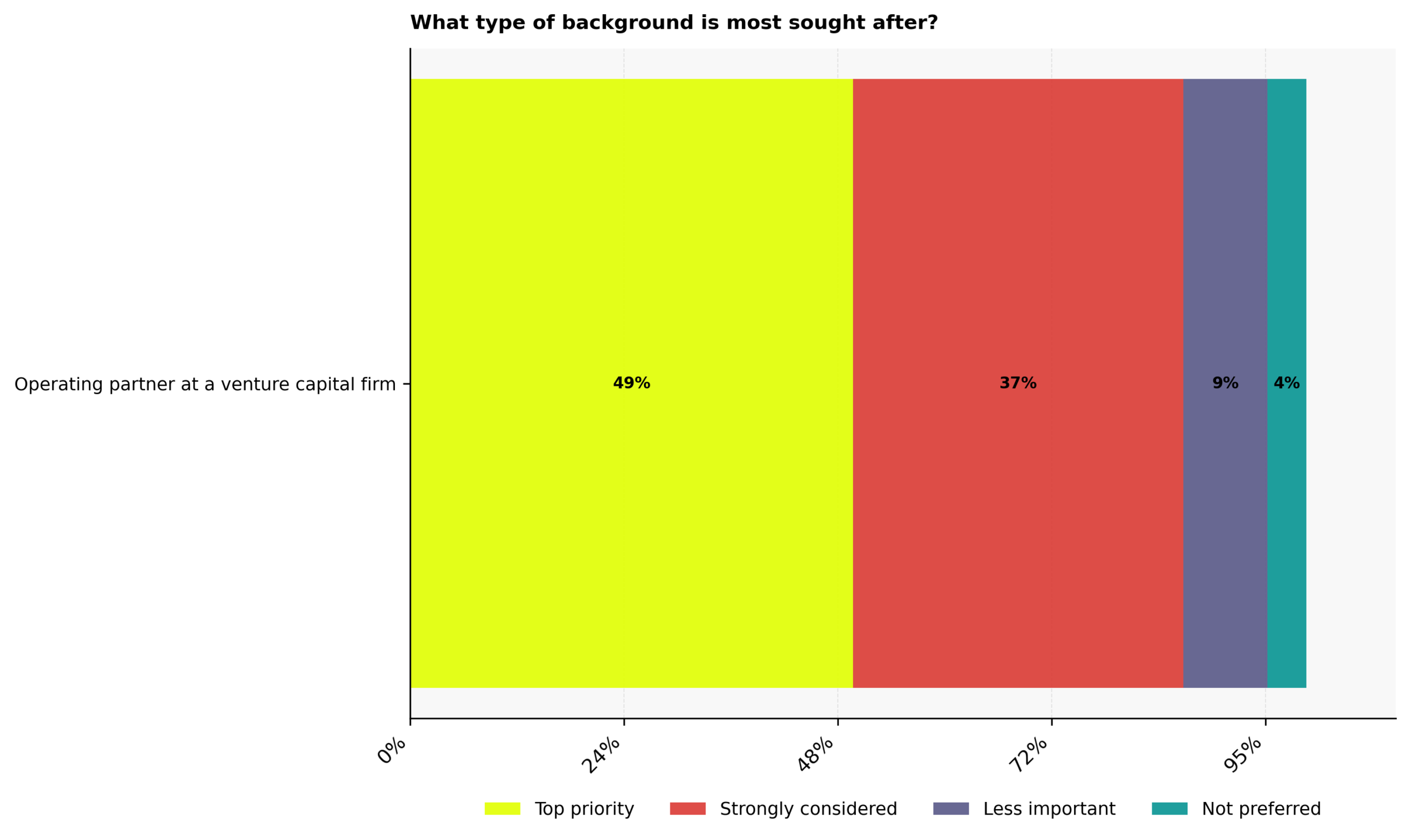
An operating partner background at a venture capital firm stands out as the most sought-after profile when selecting a fractional chief revenue officer. 49% of C-suite founders list it as a top priority, indicating a strong preference for leaders who understand investor expectations, portfolio scaling, and board-level dynamics.
Another 37% agree that this background is strongly considered, bringing the combined interest to 86%. Founders clearly value partners who can align revenue strategy with funding milestones and growth targets.
This demand fits the wider picture of what makes an effective CRO. The ideal background blends superior leadership skills, strong business acumen, and go-to-market expertise with a track record of driving predictable revenue.
At the lower end of the data range, 9% of C-suite founders view the operating partner role as less important, while only 4% don’t prefer it, confirming that VC operating experience has broad appeal across early- and growth-stage teams.
Where do C-suite founders typically begin their search for a fractional CRO?
100% of C-suite founders typically begin their search for a fractional chief revenue officer in Denver via direct outreach on LinkedIn
All searches begin in the same place:
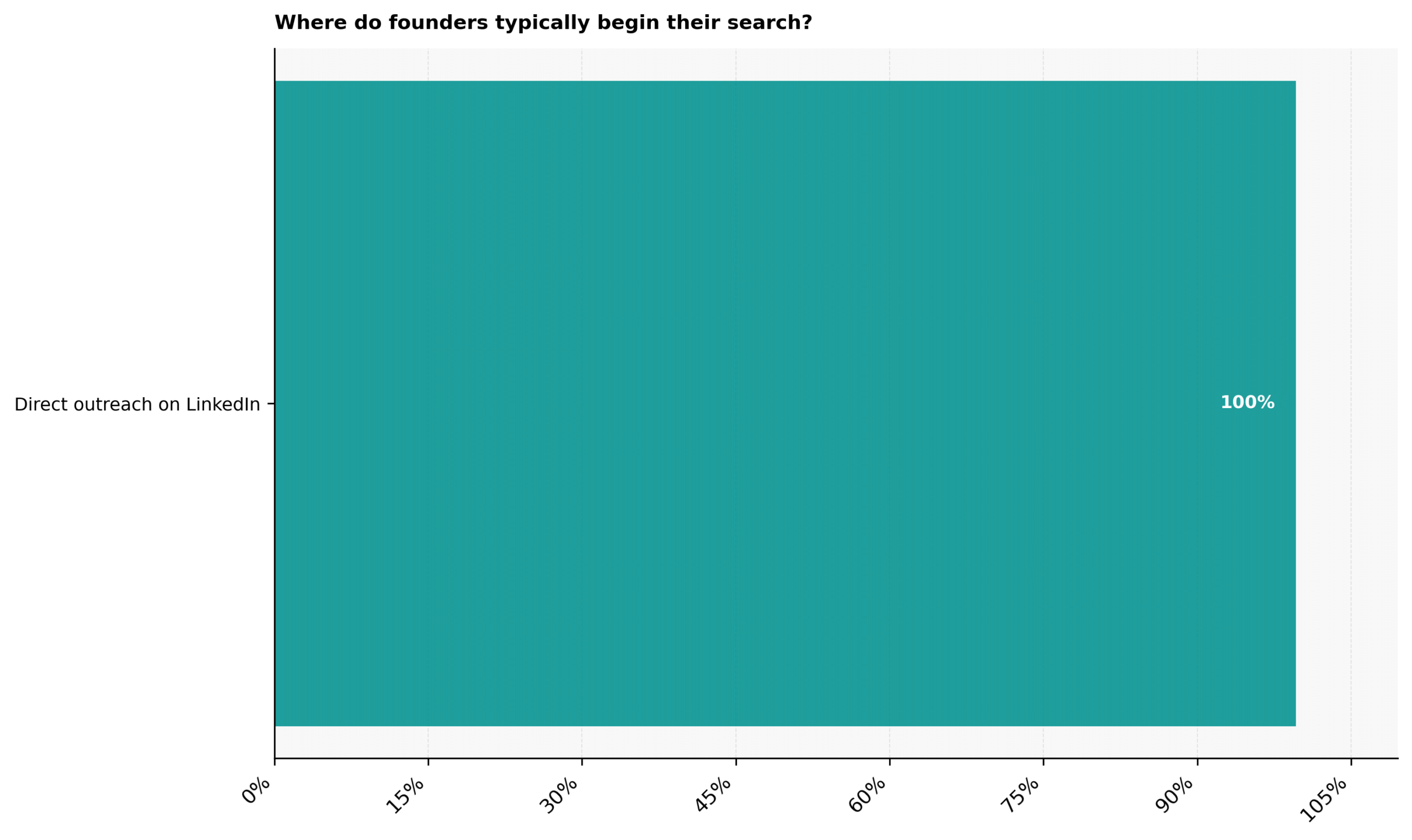
The search for a fractional chief revenue officer in Denver typically starts in one place, namely direct outreach on LinkedIn. 100% of our audience’s searches begin here, proving the platform is the universal first step.
C-suite founders use LinkedIn to review profiles, check recommendations, and message candidates directly, all within a network built for professional connections. This approach offers speed and control, letting leaders identify and engage potential CROs without intermediaries or lengthy processes.
LinkedIn’s scale in the US supports its position as a natural starting point. The platform has approximately 247 million to 270 million registered users in the United States, making the country its largest market globally.
For founders seeking specialized leadership, this large professional network provides access to a wide pool of executives and experienced operators. The 100% figure therefore points to direct LinkedIn outreach as a consistent first step when C-suite founders begin looking for fractional revenue leadership.
Which source is trusted most by C-suite founders when identifying fractional CRO candidates?
87% of C-suite founders find professional networking platforms to be a reliable option when identifying top fractional chief revenue officers in Denver, but 13% don’t trust these platforms
Trust is largely centred in one area:
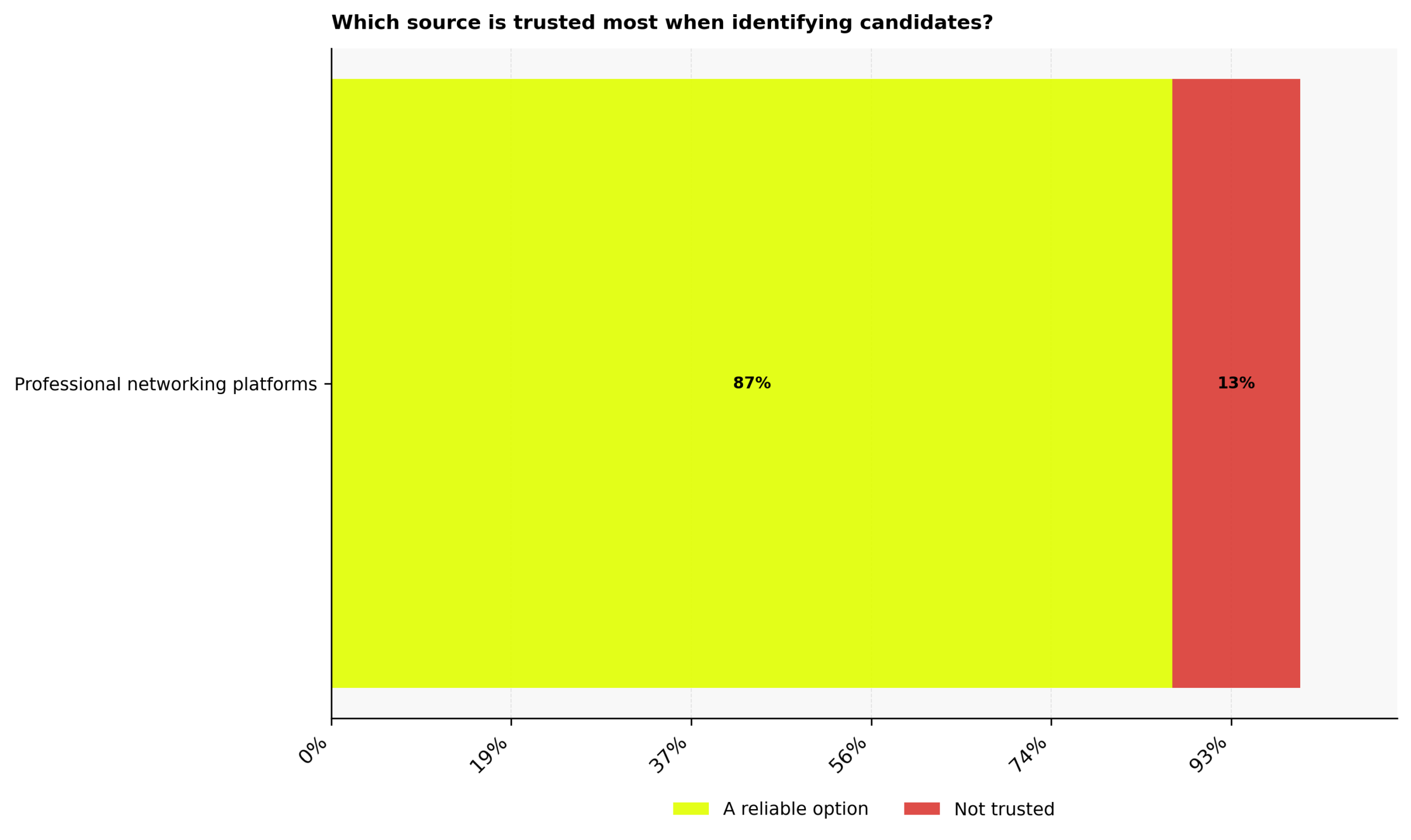
Professional networking platforms are the most trusted source for identifying fractional chief revenue officer candidates among C-suite founders. A strong 87% view these platforms as a reliable option, pointing to a clear confidence in the quality and relevance of profiles found there.
C-suite founders appreciate the ability to review career histories, endorsements, and shared connections before reaching out. This trust supports faster, more informed decisions and reduces the need for third-party screening.
On the other hand, 13% don’t trust these networking platforms. Their approach may place less emphasis on digital professional networks when identifying candidates, so they may prefer referrals or niche communities instead. However, the large difference in opinions reveals that professional networks offer a familiar, credible way to find executives with relevant commercial backgrounds and leadership experience.
This trust in professional networking platforms also fits the broader role they play in career development. They support knowledge sharing, help people build professional connections, and give individuals a way to strengthen their personal brand.
For C-suite founders, these benefits can make networking platforms useful when assessing potential fractional CROs in Denver, as profiles and professional connections provide context beyond a job title alone.
What is the most valuable resource for C-suite founders when researching fractional CROs in Denver?
For 38% of C-suite founders, the top resource when researching fractional chief revenue officers is founder communities and Slack groups, 39% also find these to be strong resources, and for 15%, they are a minor resource, yet 8% don’t find them valuable
One resource dominates, but to varying degrees:
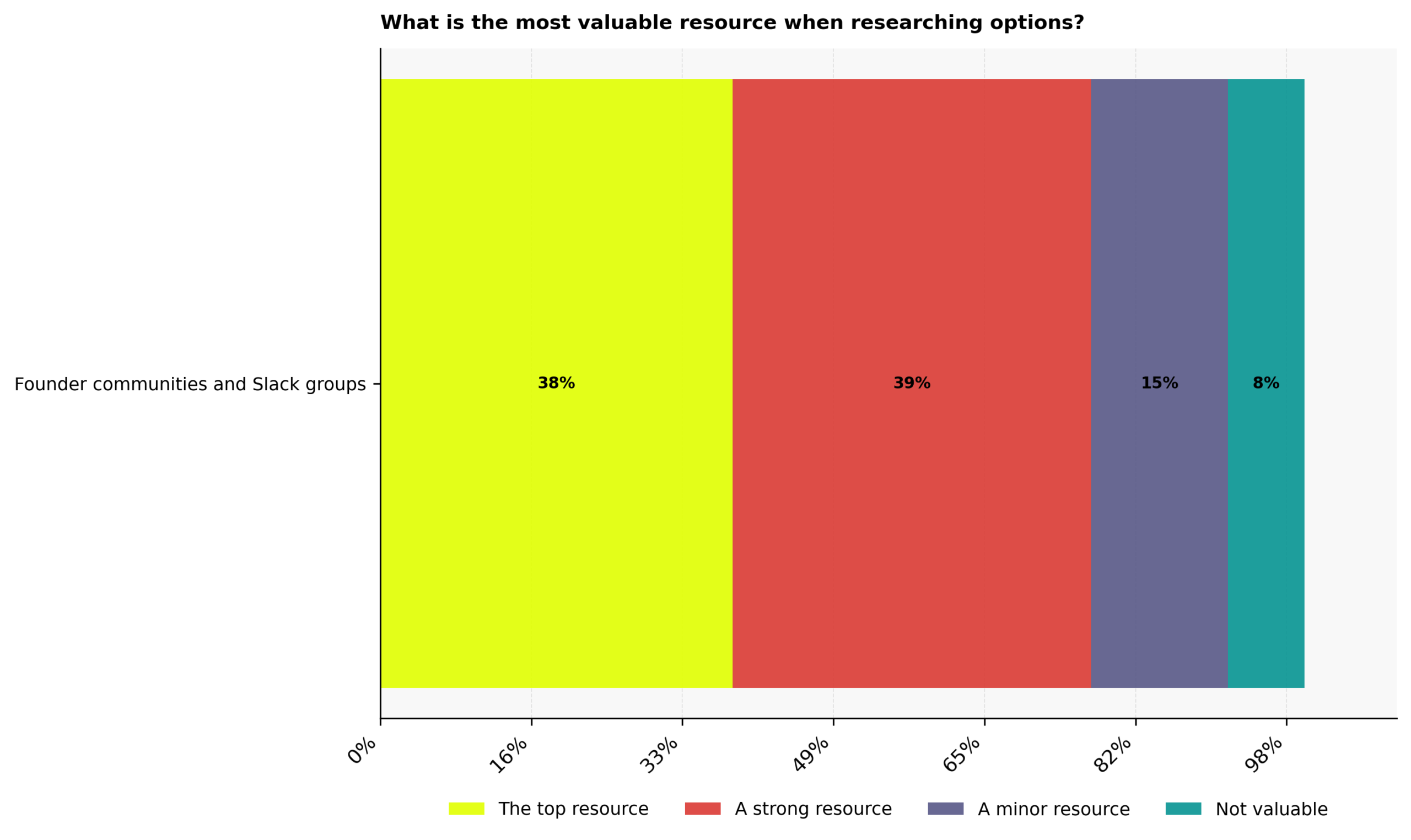
Founder communities and Slack groups serve as the most valuable resource when researching fractional chief revenue officer options. For 38% of C-suite founders, they are the top resource, while 39% consider them a strong resource. This means that over three-quarters of our audience place these communities in one of the two highest value categories, showing that peer-led spaces can provide useful access to practical information when founders are researching their options.
On the lower end, 15% of C-suite founders consider these communities a minor resource, often relying more on personal networks or specialized marketplaces. Another 8% of our audience believe they are not valuable resources, which may reflect limited access to private groups or niche sectors.
Even so, the clear majority lean on community-driven insights to guide decisions. For Denver teams, joining active Slack groups and founder forums can accelerate the search and improve fit. Engaging with these networks helps leaders connect with a top fractional chief revenue officer through peer validation and shared experience.
What role does an existing network play in how C-suite founders decide on a fractional CRO?
An existing network is a crucial factor in access to warm introductions for sales and plays a crucial role in C-suite founders’ hiring decisions, while 55% cite warm introductions as an important consideration, and 6% find them somewhat relevant
Decisions require a warm start:
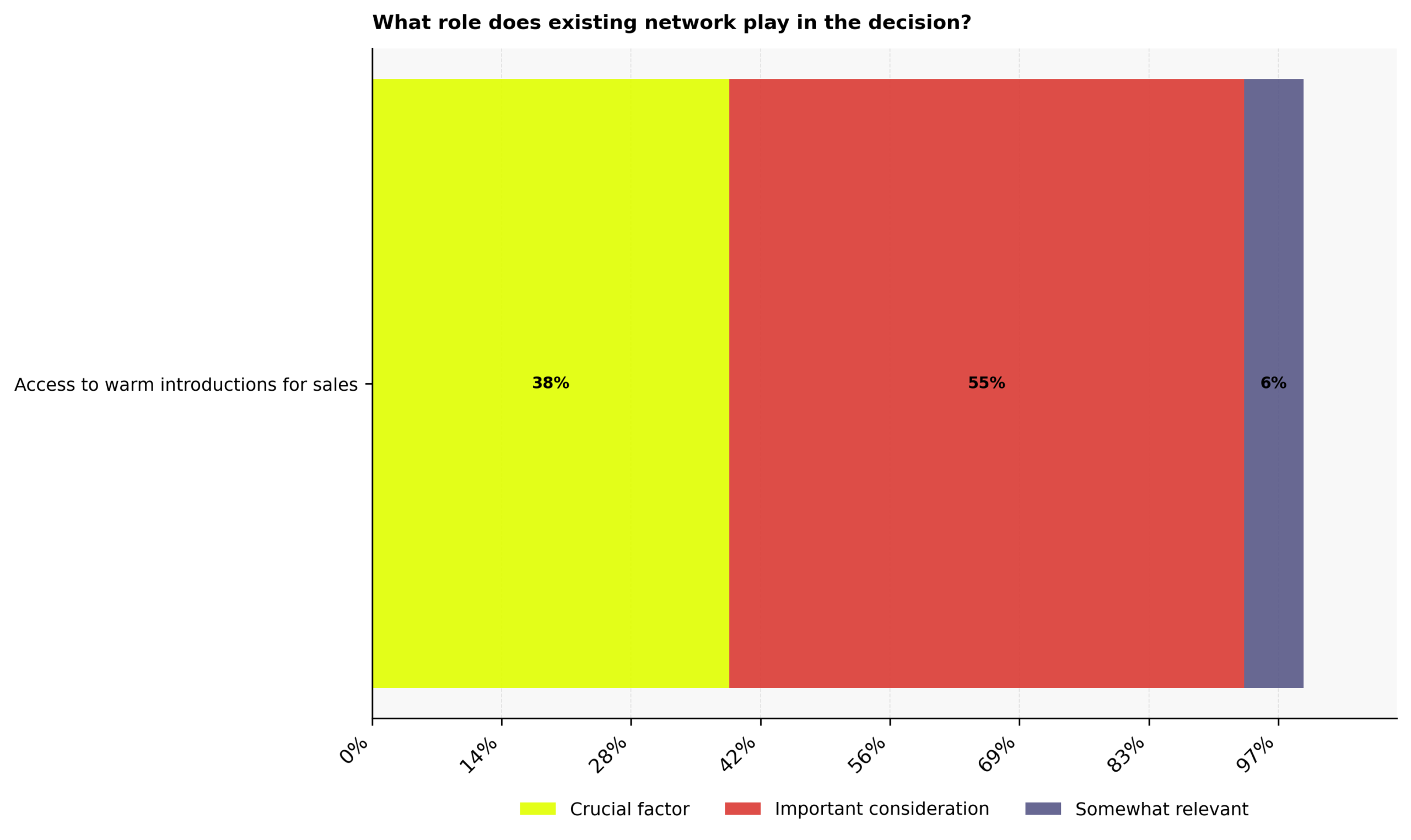
An existing network plays a strong role in how C-suite founders assess fractional CRO candidates, particularly when it can provide warm introductions for sales. For 38% of our audience, access to these introductions is a crucial factor, while 55% see it as an important consideration. In total, 93% place warm sales introductions in one of the two highest-value categories, showing that an established network can add practical value beyond a candidate’s individual experience.
The remaining 6% of C-suite founders view access to warm introductions as somewhat relevant, so the network still has some value even when it is not central to the decision. No other category is represented, giving the results a clear focus on the usefulness of established connections.
The preference for warm introductions also correlates with wider research into referral-led business development. Harvard Business Review reports that warm introductions drive 5x higher conversion rates than cold outreach, making them a powerful advantage for teams chasing predictable revenue.
For founders, Denver-based candidates who map their connections, share forwardable intros, and activate referrals early create momentum that cold methods cannot match. For fractional CROs, an existing network can therefore support both credibility and access to potential sales opportunities.
How do C-suite founders typically verify a fractional CRO candidate’s credibility before hiring?
100% of C-suite founders typically verify the credibility of a fractional chief revenue officer by reviewing LinkedIn recommendations
LinkedIn plays a starring role in recommendations:
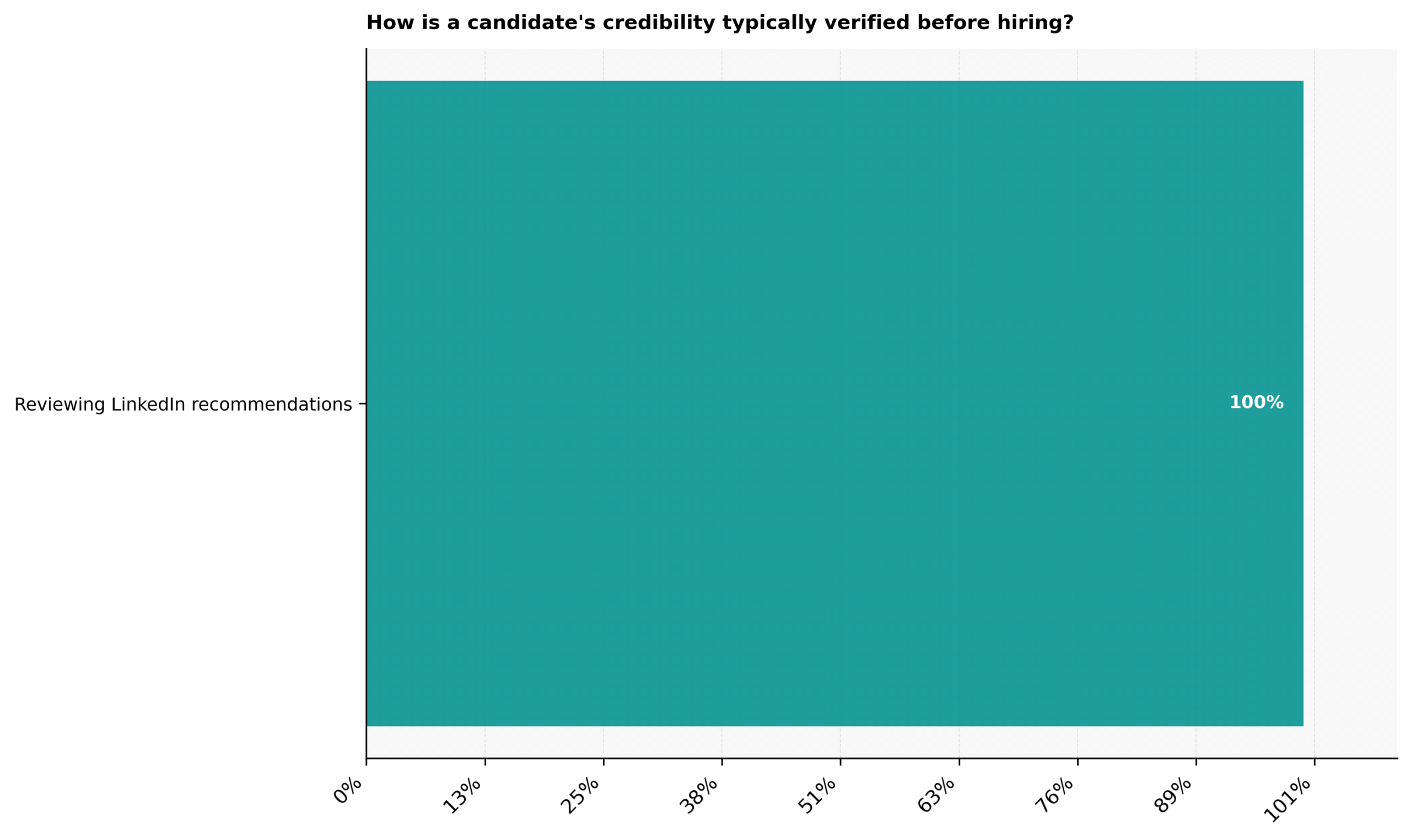
Verifying a fractional chief revenue officer candidate’s credibility starts and ends with reviewing LinkedIn recommendations. 100% of C-suite founders use this method, making it the universal standard before hiring.
Founders rely on these recommendations to gauge real-world performance, leadership style, and results delivered in past roles. Unlike resumes or self-written profiles, recommendations come from colleagues, clients, and executives who have worked directly with the candidate, offering third-party validation that carries weight in decision-making.
This consistent approach emphasizes how professional trust is built in digital networks. LinkedIn recommendations provide concise, searchable proof of impact, letting founders compare candidates quickly and confidently.
Teams that maintain a strong set of recent, detailed recommendations increase visibility and shorten the sales cycle. And candidates who encourage clients and peers to write specific, outcome-focused notes stand out during founder reviews.
How do C-suite founders typically vet a fractional CRO candidate’s claimed results?
100% of C-suite founders typically vet a fractional chief revenue officer’s claimed results by reviewing LinkedIn endorsements and posts
Endorsements and posts create credibility:
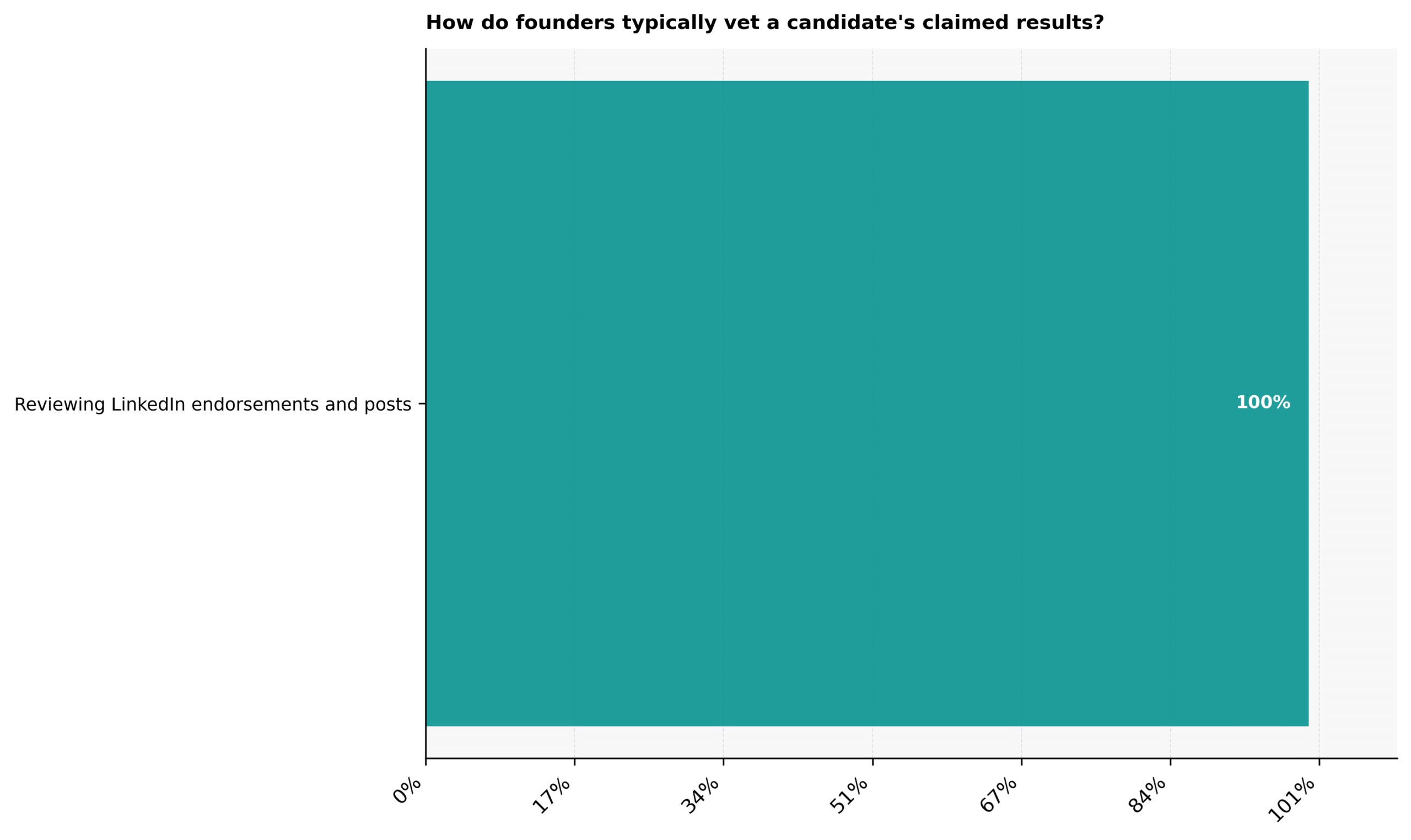
Following the previous focus on LinkedIn recommendations, C-suite founders also rely on LinkedIn endorsements and posts when checking a candidate’s claimed results. 100% of our audience take this approach, showing that it is the consistent method used to assess whether a fractional CRO’s stated achievements have credible professional support.
Endorsements can provide evidence that other professionals recognize a candidate’s claimed skills and experience, rather than leaving those claims to stand alone. LinkedIn posts can add further context by showing how candidates discuss commercial strategy, leadership, and results within a professional setting, giving founders a clear picture of both capability and communication style.
This pattern displays how professional credibility is built and verified online. Research on LinkedIn endorsements describes them as signals that colleagues who have seen the work firsthand have confirmed claimed expertise. Endorsements act as quick, peer-validated markers that a candidate’s listed skills match real-world performance, while posts showcase thought leadership and revenue frameworks in the candidate’s own words.
What is most reassuring to C-suite founders when a fractional CRO candidate discusses past failures?
When fractional chief revenue officer candidates are honest about what did not work and why, 100% of C-suite founders find this a positive attribute
Reassurance doesn’t always come from a win:
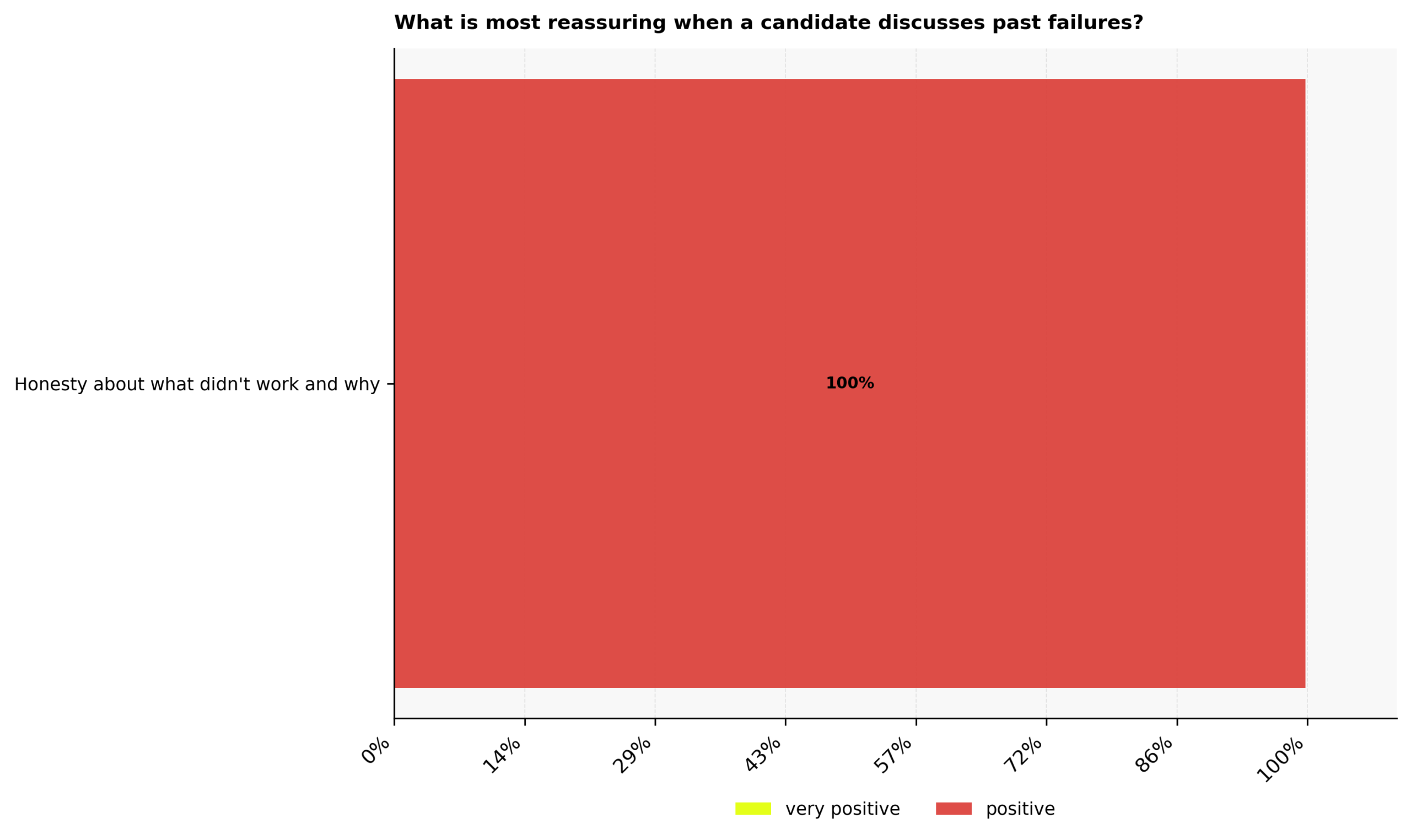
C-suite founders view honesty about what went wrong and why positively when a fractional CRO discusses past failures. 100% of our audience view this as a positive attribute.
This unanimous response illustrates that founders value straightforward accountability over polished narratives. When candidates explain missteps, share the root causes, and describe lessons learned, they demonstrate self-awareness and a growth mindset that founders trust for high-stakes revenue roles.
This preference aligns with broader leadership principles outlined by Forbes. Integrity and transparency build lasting business relationships, while shortcuts and vague answers erode confidence.
C-suite founders want partners who own outcomes, adapt quickly, and apply hard-won insights to new challenges. Candidates who frame failures as learning moments and tie them to improved processes stand out during interviews.
What industry do C-suite founders’ companies operate in?
100% of C-suite founders’ companies operate in the financial services and fintech industry
One industry leads the way:
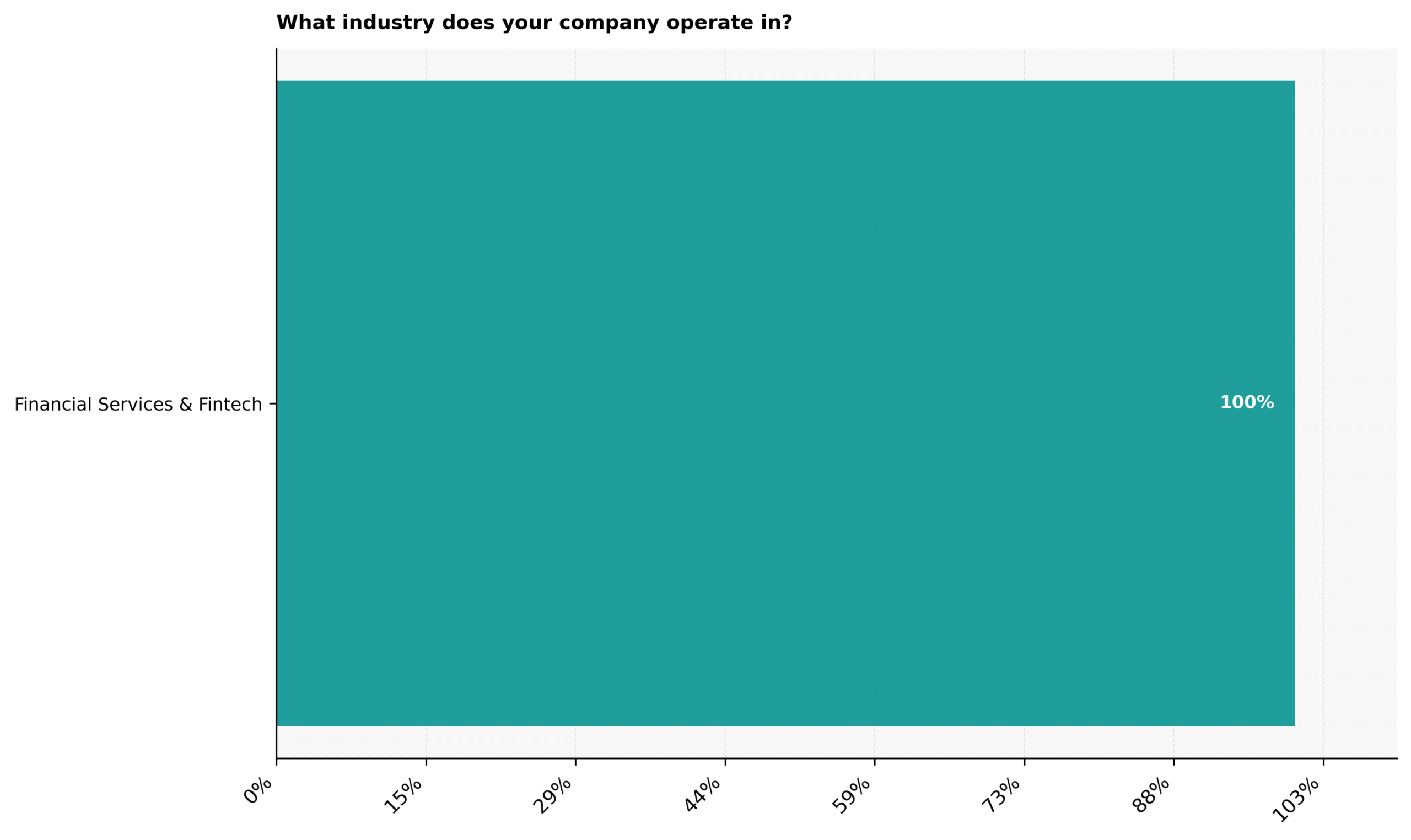
100% of C-suite founders in our audience work for companies that operate in the financial services and fintech sector, illustrating a focused cohort rather than a mixed-industry group. This concentration influences how leaders evaluate fractional chief revenue officer candidates, since revenue models, compliance needs, and sales cycles in finance differ from other fields. Founders look for leaders who understand regulated environments, partnership ecosystems, and the metrics that drive trust and growth in financial products.
The financial industry focus also influences where teams search, how they vet, and what proof of impact they value. Candidates with fintech or financial services experience can speak directly to challenges like onboarding complexity, risk management, and unit economics that are important to these teams. Additionally, sector alignment shortens ramp time and increases the odds of hitting revenue targets quickly.

Gus Byleveld
Key takeaways for fractional CROs in Denver
Evidently, there is a clear preference for fractional CROs in Denver who can bring senior revenue expertise, investor-level insight and practical commercial networks to growing businesses. For C-suite founders, the search and vetting process is strongly centred on professional networks, peer communities and recommendations that provide evidence of a candidate’s experience and credibility.
These statistics also show that founders value more than a polished track record. They look for candidates who can demonstrate relevant industry knowledge, activate useful relationships and speak openly about previous challenges and what they learned from them.
0 Comments